CH-46 Sea Knight Helicopter – Workhorse of the Navy
A Brief Overview of the CH-46 Sea Knight Helicopter
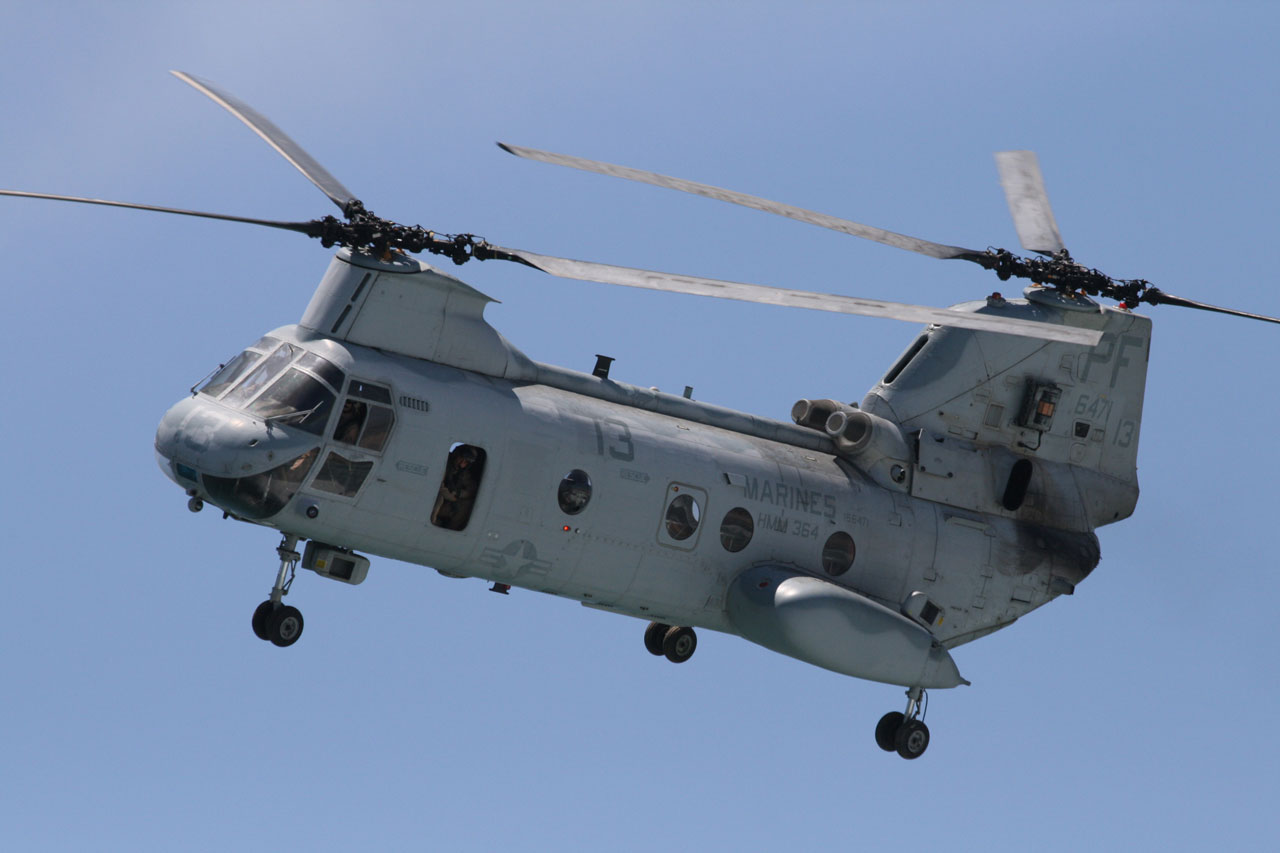
The CH-46 Sea Knight Helicopter became a centerpiece for Navy and Marine Corps in June 1964. Initially, it was the Vertol Model 107, first flown on April 22, 1958. It targeted both military and civilian sectors. The Army placed an initial order due to its intrigue. However, their interest faded with the upcoming, larger Model 114. This later model is the renowned Chinook. By 1960, Boeing had absorbed Vertol.
This is the CH-47 Chinook
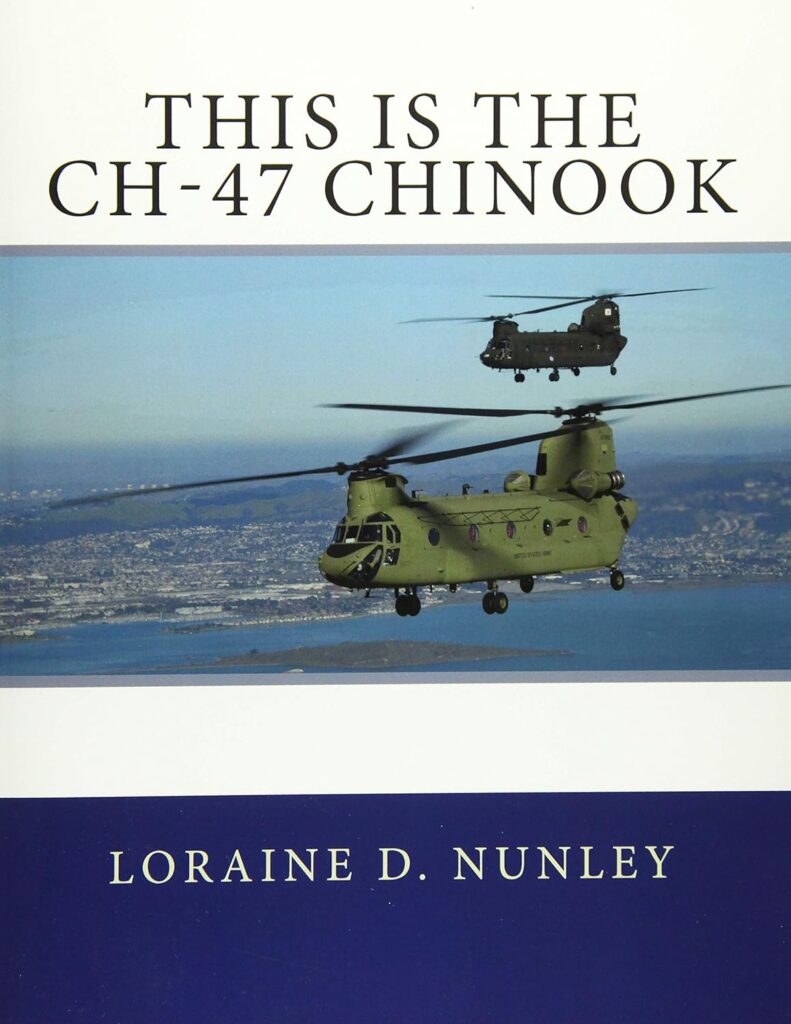
The CH-47 Chinook aircraft is one of the most reliable and efficient transport helicopters in the world. Its ability to fly fast and transport heavy loads in many different climates and wind conditions make it an invaluable part of military transport aircraft. This book is intended to introduce children to this important helicopter through striking photographs. Adults may also find themselves fascinated by the remarkable capabilities of this machine.
The Marines and Navy Embrace the Sea Knight
The Marines saw the Model 107 as a modern replacement for their piston-engine H-34 Seahorse. After it won the Marine Corps’ competition in 1961, officials introduced the CH-46A Sea Knight in October 1962. The Navy recognized the potential of this new aircraft breed and acquired 14 UH-46A variants. They mainly used them for vertical replenishment (VertRep) tasks, transferring supplies between vessels. The Navy then ordered 10 more UH-46Ds.
Continuous Upgrades: From CH-46A to CH-46F
Impressed by the CH-46A’s prowess as a troop transport, the Marines procured 246 units of the upgraded CH-46D, boasting increased power and cutting-edge rotor blades. The CH-46F followed, offering further enhancements, including advanced avionics. Five units were refashioned as VH-46Fs, catering to VIP transport requirements.
The 1970s Upgrades and CH-46s’ Role in Marine Corps
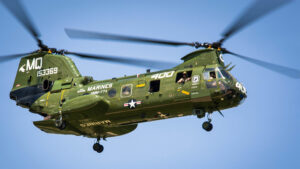
Manufacturers suggested performance enhancements and combat resilience improvements for the aircraft in the early 1970s. The enhancements introduced crash attenuating seats, a fuel system resistant to crashes and combat, an improved navigation system, new engines, and fiberglass rotor blades. Consequently, the Navy brought its existing CH-46Ds and CH-46Fs up to this advanced standard. The Navy repurposed some CH-46s for search and rescue missions, added winches, and renamed them as HH-46Ds.
The Marine Corps relies on the CH-46 for quick transport from ship to shore and beyond, central to their warfighting capabilities. The CH-46 shifts roles when troops reach land, delivering ammunition, food, and other necessities while also facilitating aeromedical evacuations. Despite the absence of inherent weaponry, a machine gun can fit in the CH-46’s crew door for self-defense. Furthermore, it can hold up to 22 troops or 5,000lbs of cargo, either internally or underslung.
The CH-46 in Conflict Zones and Future Developments
The CH-46’s first taste of conflict came during the Vietnam War, and it has since participated in every Marine Corps-involved conflict, including Operation Desert Storm with ten Marine Corps squadrons deployed to the Middle East.
As of September 2004, the Navy had slated the replacement of its UH-46 Sea Knight fleet with the MH-60S Knighthawk. The final production model, the CH-46E, saw 174 units delivered to the Marine Corps, which has been eyeing the CV-22 Osprey as a potential successor. However, given the Osprey’s challenging development, the venerable CH-46 Helicopter will continue its service for a few more years.
Frequently Asked Questions
was the CH-46 Sea Knight Helicopter introduced into service?
The CH-46 Sea Knight Helicopter was introduced into service in June 1964.
What are some roles of the CH-46 Sea Knight Helicopter in the Marine Corps?
In the Marine Corps, the CH-46 Sea Knight Helicopter provides rapid transport from ship to beach and beyond. Once troops are ashore, its role changes to re-supply, cycling ammunition, food, and other stores from ship to shore and providing aeromedical evacuation of casualties.
What improvements did the CH-46D and CH-46F models bring?
The CH-46D model had increased power and new rotor blades. The CH-46F model brought further improvements, including to the avionics.
In what conflicts has the CH-46 Sea Knight been used?
The CH-46 Sea Knight first served during the Vietnam War and has participated in every subsequent conflict involving the Marines. It also deployed to the Middle East during Operation Desert Storm.
What is planned for the future of the CH-46 Sea Knight fleet?
The Navy had planned to replace its UH-46 Sea Knight fleet with the MH-60S Knighthawk by September 2004. The Marine Corps has been considering the CV-22 Osprey as a replacement, but its development has been challenging. Therefore, the CH-46 Helicopter is likely to continue serving for a few more years.