Korean War and the Medevac Helicopter
The development of helicopters during and after the Second World War proved the value and utility of rotary wing aircraft in combat situations. So much so that the Army, Navy and Air Force all set up their own helicopter development units.
This enabled a shift in how critical care was delivered in combat. During previous conflicts, medical stations had to be as close to the front line as possible to shorten the path to care. This led to obvious risks and compromises in both treatment and conditions. The advent of medevac helicopter meant that field hospitals could be set up in central locations and have patients delivered to them. That meant better care, better conditions and the ability to recover after operations before being evacuated. That alone saved hundreds of lives.
The Korean War was the formative combat situation for medevac and helicopters in general. The UN forces only had a few helicopters in service at the time but they quickly made use of them. The U.S. Air Force’s 3rd Air Rescue Squadron was first into action using old H-5 helicopters. These were Sikorsky S-51, originally introduced in 1945 and used throughout the armed forces. Their primary aim was to rescue downed pilots who were shot down. They soon proved their worth and earned the undying gratitude of the air force .
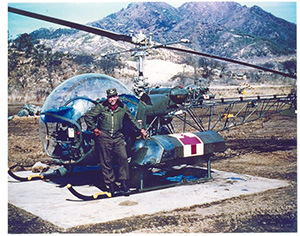
Occasionally, the unit was asked to recover casualties from the line, which they did. This led to calls for more and better helicopters to help out. The arrival of the 2nd Helicopter Detachment and their 4 Bell H-13s heralded a more formal introduction of medevac to combat. The 2nd was quickly followed by the 3rd, 4th and 1st Helicopter Detachments, all using Bell H-13s.
These medevac flights proved so successful that the detachments were moved to become army units as part of the Mobile Army Surgical Hospital (MASH). The H-13 carried stretchers above the skids that were soon covered with a plexiglass “cocoon” for the head by enterprising technicians. This arrangement was quickly modified further to add heating from the engine and a plasma carrier to aid critical care.
MASH ANGELS: Tales of an Air-Evac Helicopter Pilot in the Korean War

An inspiring first-hand account by military aviation pioneer Richard Kirkland recounts how he and a handful of daring helicopter pilots revolutionized battlefield medical evacuation and blazed the trail for modern air-evac flying. In MASH ANGELS Richard Kirkland recounts his experiences on the front lines of rescue flying and military medicine.
This is a very good read. I don’t know if he wrote his own book or had it ghostwritten, but he tells a pretty good story. The guy has truly been there. It’s like watching M.A.S.H. but you know that none of it was made up (in fact the real Hawkeye is prominent in this book, and Kirkland says the TV version wasn’t that far from the truth). A must-read for war buffs. -klebs
The Bell H-13 helicopter was soon joined by the H-23 Raven which was based on a Hiller Model 360 and the H-19 Chickasaw which was based on the Sikorsky Model S-55. The first was a 3-man helicopter used for close medevac and the latter a medical transport.
There is no doubt that the utility for rotary wing aircraft saved thousands of lives during the Korean War. The Bell H-13 helicopter alone is credited with saving over 18,000 lives during the conflict, earning it the name “Angel of Mercy” from the troops on the ground. The ability to medevac casualties quickly and smoothly from danger ensured critical care could be delivered to a much higher standard than before. Field hospitals could now be established in semi-permanent bases that could deliver a much higher standard of care and welfare to all servicemen.
The success of medevac also cemented the place of the helicopter in all future combat situations and forced the rapid development of faster, more effective helicopters for military use.