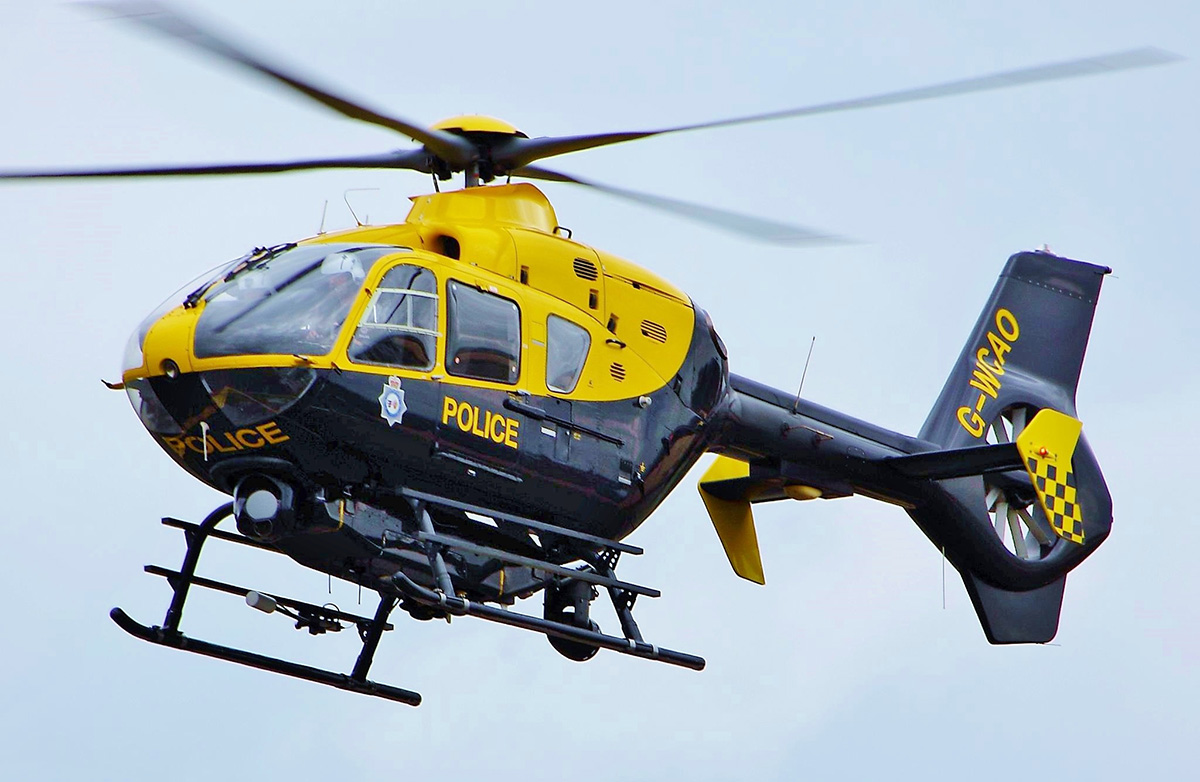
Airbus EC135 Police Helicopter

The Remarkable Journey of the Airbus EC135 Helicopter

Origins of Airbus EC135

The Airbus EC135 helicopter has a fascinating origin story. Initially, it was a humble demonstrator. However, it quickly climbed the ladder of popularity. Airbus decided to turn it into a production model.

The EC135 began its journey in the 1970s. The EC135 was originally built by German manufacturer Messerschmitt-Bölkow-Blohm and Aerospatiale as the BO 108. It was not just a helicopter, but a technology showcase. It aimed to highlight the latest advances in avionics and aerodynamics.

Helicopter Study Guide: A practical review for the checkride

Helicopter Study Guide

This guide provides an excellent review of key material to help the helicopter student pass their check ride. The guide uses a question and answer format, with expanded explanations. This format is helpful for student preparing for the oral portion of the checkride. This edition is written for the private pilot, but contains useful information for all pilots.

Innovative Features

The Airbus EC135 boasted innovative features. It had a hinge less main rotor, which was adopted by Sikorsky and Boeing. Another feature was its low-profile transmission. This provided more cabin space, a significant improvement. Also, it had a low vibration motor. The composite tail rotor and cabin materials were other standout features.

The EC135 helicopter also featured digital flight controls. Furthermore, Airbus equipped the helicopter with EFIS instrumentation. This allowed for instrument-only flight. It was indeed a revolution in avionics.

Transformation into Eurocopter

A significant development occurred in 1992. Aerospatiale transitioned into Eurocopter. Consequently, the BO 108 obtained access to the Fenestron tail rotor. This rotor was quieter and more efficient than the existing one. Airbus incorporated this design into the helicopter’s production model.

First Flight and Production

The EC135 first took flight in 1994. That same year, it earned certification in Germany and the U.S. The maiden Airbus EC135 model was powered by twin Pratt and Whitney Canada PW206B engines. It was designated as the EC135P-1.

Variants and Engines

Airbus modified the EC135P-1 allowing it to be fitted with two Turboméca Arrius 2B engines. This model was known as the EC 135T-1. Interestingly, both engine variants remain available today. While the Pratt and Whitney engines deliver 621 shp, the Turboméca Arrius 2B provides 583 shp.

Specifications and Upgrades

Over time, the Airbus EC135 has seen multiple upgrades including newer, more advanced engines. There were also software upgrades to FADEC and improvements to avionics. The latest version of the EC135 helicopter has impressive stats. It boasts a cruising speed of 158 mph and a maximum speed of 178 mph. Additionally, it has a range of 395 miles.

Interior Configurations

The EC135’s cabin is adaptable. It can transport five to seven passengers. Besides, it can be reconfigured for utility roles, such as law enforcement or medevac. This helicopter’s reliability and flexibility make it a global choice. For instance, the EC135 is used as a police helicopter or air ambulance by various organizations worldwide.

EC635 Military Variant

A military variant of the EC135 also exists. Known as the Eurocopter EC635. The EC635 helicopter was modified to serve frontline troops. It provides fire support and medevac capabilities. Countries like Portugal, Jordan, Switzerland, and Iraq currently use it.

Resilience over the Years

The Airbus EC135 helicopter shares a similarity with its smaller sibling, the Eurocopter EC120. Both have weathered changes in the aerospace industry. The EC135, with consistent improvements, has become more flexible and powerful. A civilian passenger helicopter can perform many roles. There are not many tasks this resilient machine cannot tackle.

Similar Posts

  • Medevac Helicopters in the Medical Field

    Helicopters, synonymous with adaptability and speed, have cemented their role in various sectors, both military and civilian. One of their paramount contributions remains medevac, or medical evacuation, a service that has transformed emergency medical responses. This airborne ambulance’s ability to arrive faster, more safely, and smoother than ground-based ambulances has made it a game-changer in life-saving missions.

  • | |

    A New Huey Helicopter for the Yanks Air Museum

    After many years of searching for a UH-1H Huey Helicopter to add to the Yanks Air’s collection, on August 31, 2013 the museum has received its first model. Yanks received this aircraft through the US Forestry Service. The museum will display the Huey as the entrance into the Vietnam era. The Huey is one of the most extraordinary aircraft of our time. Officially the UH-1 series is the Iroquois.

  • |

    The Evolution of the Bell 407: Building on the Legacy of the Bell 206

    The Bell 407 helicopter seamlessly integrates innovation and legacy, taking cues from the famed Bell 206 and the military-inspired OH-58. Introduced in 1995, this aircraft harmoniously blends groundbreaking design elements with proven performance features. From its robust engine to versatile variants like the Eagle 407 and the Bell 407GX, the 407 has made a global impact, mirroring the international acclaim of its predecessor. Delve into this article to understand the advancements, the global influence, and the lasting legacy of a helicopter that’s reshaping aerial transportation.

  • |

    Helicopter Flight Schools in Arizona

    Embark on an exhilarating journey to the skies amidst the stunning landscapes of Arizona. Our article, “Helicopter Schools in Arizona,” unveils the hidden gems of the Grand Canyon State’s aviation education. Arizona’s diverse terrain, from desert plains to majestic mountains, provides the perfect training ground for aspiring helicopter pilots.

    Discover top-notch flight schools with experienced instructors who will guide you through every twist and turn of your aviation adventure. Learn about the unique training environments that prepare you for real-world challenges and varied weather conditions.

    From Chandler to Tucson, Scottsdale to Prescott, we’ve curated a list of the best helicopter flight schools in Arizona. Whether you’re dreaming of a private pilot license or aiming for advanced certifications, this article is your compass to navigate Arizona’s vibrant aviation community.

    Don’t miss the chance to turn your aviation dreams into reality. Read on and take your first step towards soaring the Arizona skies!

  • Step off the Beaten Track with Heli-Skiing

    Everyone has hobbies but if you are the type of person that loves an adrenaline hit then you are no stranger to the rush of skiing or snowboarding. There are countless others, but one constant is the excitement from completing a difficult maneuver or the thrill of battling with some tough terrain and both winter and extreme sports fans bond over this fact. If you are nodding your head in agreement, it is time to step off the beaten (or well-skied) track in search of something more challenging. What if it was suggested you go heli-skiing? What if someone offered you the chance to experience the following:

  • |

    The Harvester Helicopter: Changing in Modern Agriculture

    In the realm of modern agriculture, few innovations have captured attention quite like the harvester helicopter. Beyond the unmistakable hum of its rotors and its aerial prowess, this marvel represents the synergy of aviation and farming. Navigating through challenging terrains, ensuring peak crop harvesting, and championing sustainable practices, the harvester helicopter is redefining agricultural benchmarks. With its blend of speed, efficiency, and reduced environmental impact, it’s emerging as a frontrunner in the push towards a greener, more productive future. Dive into our comprehensive exploration to understand how this aerial giant is setting the stage for the next era of farming. Whether you’re an agriculturist, tech enthusiast, or simply curious, this article promises insights that will make you look at the skies, and the fields below, in a whole new light.