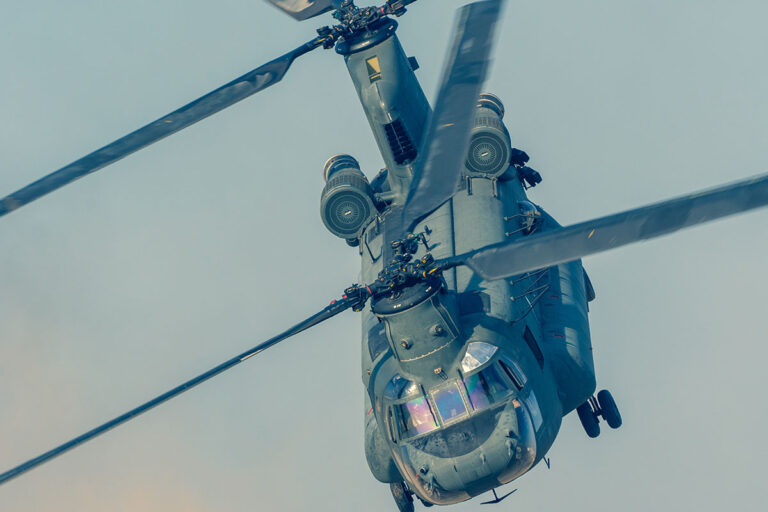
Boeing Chinook Helicopter in Flight
|

Boeing Chinook Helicopter Performance Video

This video demonstrates the multiple uses of the Chinook CH-47 Helicopter.  The Chinook may look like a lumbering giant, but this video will change your opinion of the Chinook Dual-Rotor Helicopter.  The CH-47 goes through some powerful moves and you quickly realize that even the Chinook pilots get to have some serious fun with their machines.

This is the full display by the CH47 Chinook helicopter at Farnborough International Air Show July 2010.

The Boeing CH-47 Chinook is an American twin-engine, tandem rotor heavy-lift helicopter. Its primary roles are troop movement, artillery emplacement and battlefield resupply. It has a wide loading ramp at the rear of the fuselage and three external-cargo hooks. With a top speed of 170 knots (196 mph, 315 km/h) the helicopter is faster than contemporary utility and attack helicopters of the 1960s. The CH-47 is among the heaviest lifting Western helicopters. Its name is from the Native American Chinook people.

The Chinook helicopter was designed and initially produced by Boeing Vertol in the early 1960s; it is now produced by Boeing Rotorcraft Systems. It is one of the few aircraft of that era – along with the fixed-wing Lockheed C-130 Hercules cargo aircraft – that remain in production and front-line service, with over 1,179 built to date. The helicopter has been sold to 16 nations with the U.S. Army and the Royal Air Force (see Boeing Chinook (UK variants)) its largest users.

Subscribe to RAFAEL M’s Youtube Channel!

The Final Mission of Extortion 17: Special Ops, Helicopter Support, SEAL Team Six, and the Deadliest Day of the US War in Afghanistan

Extortion 17 Helicopter Book

On August 6, 2011, a US Army CH-47D Chinook helicopter approached a landing zone in Afghanistan 40 miles southwest of Kabul. The helicopter, call sign Extortion 17, was on a mission to reinforce American and coalition special operations troops. It would never return. Insurgents fired at the Chinook, severed one of its rear rotor blades, and brought it crashing to the ground. All 38 onboard perished instantly in the single greatest moment of sacrifice for Americans in the war in Afghanistan.

Similar Posts

  • |

    Unbelievable Chinook Helicopter Extraction Video

    Extreme Chinook Helicopter Troop Extraction. This is totally insane and the pilot is awesome!  It looks like this was a video taken by a US Soldier in the Middle East.  The Chinook Pilot definitely has some serious piloting skill and confidence.  I can’t imagine how hard it would be to hover the Chinook on it’s tail and allow the soldiers to load from the rear.

  • 10 Facts about the Boeing CH-47 Chinook

    The Boeing CH-47 Chinook helicopter, a cornerstone of global military operations, boasts an impressive history and an array of features that underscore its significance. First flown in 1961, the Chinook has served in countless conflicts, showcasing unparalleled lift capabilities and adaptability. Its tandem rotor design eliminates the need for a tail rotor, optimizing lift and enabling it to carry substantial payloads, including troops, vehicles, and supplies.

  • | |

    The Oldest Helicopters Still in Service Today

    Discover the fascinating journey of the oldest helicopters still in service today, a testament to human ingenuity and technological advancement. This detailed exploration delves into the rich history of iconic helicopters like the Sikorsky UH-1 Iroquois (Huey) and Boeing CH-47 Chinook, highlighting their remarkable longevity and enduring roles in both military and civilian sectors. From their early conceptual designs to their modern adaptations, these helicopters have evolved through continuous upgrades in avionics, engines, and structural materials.

    Our comprehensive analysis includes insights from aviation experts, comparative tables of technical specifications, and a look at future prospects and modernization programs. Learn how these helicopters have remained operational for decades, the critical missions they support, and the innovations that keep them relevant. Whether you are an aviation enthusiast, a history buff, or a professional in the field, this article offers a wealth of knowledge and intriguing insights into the resilient world of rotary-wing aircraft. Dive into the enduring legacy of these airborne workhorses and appreciate the technological marvels that keep them flying high.

  • |

    The Bell UH-1 Huey Helicopter

    In 1952 the US Army specified a requirement for new helicopter to serve as a medical evacuation, helicopter trainer, troop transport and general utility helicopter. Of the twenty companies that submitted designs, Bell Helicopter won the bid in late 1953 to build the first 3 prototypes based on their Model 204 design. The first flight of the XH-40 was October 20th, 1956 at Fort Worth, Texas and Bell was commissioned to build the first 100 HU-1A helicopters in March 1960, officially named Iroquois. While its official name is rarely used, the helicopter was nicknamed the Huey and the name stuck even after the US Army changed its designation to UH-1 “Huey” Helicopter.

  • |

    Bell Huey Helicopters in Combat

    The Bell UH-1 Helicopter played an unprecedented role in the Vietnam War, earning the reputation of the most crucial military aircraft. Serving various purposes, including troop transport, armed attacks, and medical evacuations, the Huey accomplished over 36 million sorties during the war. It revolutionized the battlefield in three distinctive roles – as “slicks,” “gunships,” or “dustoffs.”

  • |

    The History of the Bell 47 Helicopter

    The Bell 47 Helicopter stands as a monumental icon in aviation history. Originating in the mid-20th century, it pioneered roles in both civilian sectors and combat zones. From its crucial interventions in the Vietnam War to its transformative impact on emergency medical services and agricultural tasks, the Bell 47’s versatility and design have left an indelible mark. Journey with us as we explore the rich tapestry of its legacy, innovations, and enduring significance in the world of rotary-wing aircraft.