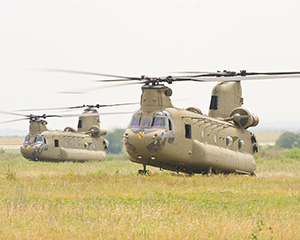
Boeing CH-47 Chinooks Taking Off

Top 10 Boeing CH-47 Chinook Helicopter Questions

The CH-47 Chinook is a highly capable and iconic military helicopter, so there are likely many common questions asked about it. Based on the search results provided, here are 10 of the most popular questions about the Chinook CH-47 helicopter:

  1. What are the key features and capabilities of the CH-47 Chinook?
    The Chinook is a heavy-lift, twin-engine, tandem-rotor helicopter known for its large cargo capacity, speed, and maneuverability. It can transport troops, artillery, equipment, and supplies. [1][2][3][4]
  2. What is the history and development of the CH-47 Chinook?
    The Chinook was developed in the late 1950s by Vertol Aircraft Corporation (later acquired by Boeing) to replace the Sikorsky CH-37 Mojave. It first flew in 1961 and entered service with the U.S. Army in 1962. [1][3][4]
  3. What are the different variants and upgrades of the CH-47 Chinook over the years? [1][3][4]
    The Chinook has undergone numerous upgrades and variants, including the CH-47A, B, C, D, and the current F-model, to improve its performance, avionics, and survivability.
  4. What are some of the notable missions and operations the CH-47 Chinook has been involved in?
    The Chinook has played a critical role in conflicts like the Vietnam War, as well as humanitarian relief efforts, medical evacuations, and aircraft recovery operations. [1][3][4]
  5. What are the Chinook’s top speed and lift capacity?
    The Chinook can travel at speeds up to 278 km/h (173 mph) and has a significant lift capacity, though the exact figures may vary by model. [2][3]
  6. What are the Chinook’s engine specifications?
    The Chinook is powered by a pair of Honeywell T55 turbine engines. [3]
  7. What are the dimensions and weight specifications of the CH-47 Chinook?
    The Chinook has dimensions of approximately 17.72 x 12.6 x 2.76 feet and a weight of around 38.2 oz. [5]
  8. What are some of the unique design features of the Chinook, such as its tandem rotor configuration?
    The Chinook’s distinctive tandem rotor design, with two large rotors rotating in opposite directions, allows it to achieve high lift and maneuverability without the need for a tail rotor. [2][3][4][5]
  9. What are the Chinook’s primary and secondary missions?
    In addition to its primary cargo transport role, the Chinook is also used for medical evacuation, search and rescue, parachute drops, disaster relief, and aircraft recovery.[3][4]
  10. What countries operate the CH-47 Chinook besides the United States?
    The Chinook is used by numerous militaries around the world, not just the U.S. Army.[4]

Citations:
[1] https://squadronnostalgia.com/shop/aircraft-models/helo-aircraft-model/ch-47-chinook/
[2] https://airmodels.net/592-ch-47-chinook
[3] https://aerospace.honeywell.com/us/en/about-us/blogs/33-things-you-probably-do-not-know-about-chinook-ch47
[4] https://www.chinook-helicopter.com
[5] https://militarybricks.com/store/aircraft/ch-47-chinook/

Similar Posts

  • |

    Hueys in Vietnam: The Ascendancy of Air Cavalry

    The Vietnam War era was marked by countless innovations, but none stood out quite like the Bell UH-1 “Huey” helicopter. As the backbone of the 1st Cavalry Division (Airmobile) and other military branches, the Huey shifted military tactics from traditional ground movements to agile aerial operations. Beyond its tactical agility, it came armed with formidable firepower, redefining aerial warfare. This article delves into the Huey’s meteoric rise, its game-changing presence in battles like Ia Drang Valley, and its global military adoption, painting a vivid picture of a machine that changed the course of history.

  • Masterpiece of Military Aviation: The Sikorsky UH-60 Black Hawk Helicopter

    Welcome to a comprehensive journey of understanding the Sikorsky UH-60 Black Hawk helicopter. In this article, we will explore its inception, its various models, and the distinct roles it plays in the military. Prepare to unlock the rich history and extensive capabilities of this groundbreaking aircraft.

  • |

    The Bell UH-1 Huey Helicopter

    In 1952 the US Army specified a requirement for new helicopter to serve as a medical evacuation, helicopter trainer, troop transport and general utility helicopter. Of the twenty companies that submitted designs, Bell Helicopter won the bid in late 1953 to build the first 3 prototypes based on their Model 204 design. The first flight of the XH-40 was October 20th, 1956 at Fort Worth, Texas and Bell was commissioned to build the first 100 HU-1A helicopters in March 1960, officially named Iroquois. While its official name is rarely used, the helicopter was nicknamed the Huey and the name stuck even after the US Army changed its designation to UH-1 “Huey” Helicopter.

  • Medevac Helicopters in the Middle East

    Helicopters have proven themselves time and again in every scenario they have been exposed to. One of the areas they have particular excelled at is medevac and casevac.  Helicopters can and will go where other aircraft cannot and where ambulances can’t reach to rescue the wounded. They provide fast, smooth transportation of casualties to field hospitals many miles from the front lines and offer the ability to begin critical care as soon as they enter the airframe.

    During the two Iraq wars and while in Afghanistan, helicopters have continued their service to troops on the front lines. Soldiers and commanders depend on them, they regard them as essential and combat operations are not planned unless medevac choppers are available if needed. Such is the importance place on them in modern warfare.

  • | |

    The Oldest Helicopters Still in Service Today

    Discover the fascinating journey of the oldest helicopters still in service today, a testament to human ingenuity and technological advancement. This detailed exploration delves into the rich history of iconic helicopters like the Sikorsky UH-1 Iroquois (Huey) and Boeing CH-47 Chinook, highlighting their remarkable longevity and enduring roles in both military and civilian sectors. From their early conceptual designs to their modern adaptations, these helicopters have evolved through continuous upgrades in avionics, engines, and structural materials.

    Our comprehensive analysis includes insights from aviation experts, comparative tables of technical specifications, and a look at future prospects and modernization programs. Learn how these helicopters have remained operational for decades, the critical missions they support, and the innovations that keep them relevant. Whether you are an aviation enthusiast, a history buff, or a professional in the field, this article offers a wealth of knowledge and intriguing insights into the resilient world of rotary-wing aircraft. Dive into the enduring legacy of these airborne workhorses and appreciate the technological marvels that keep them flying high.