Huey Helicopter at End of Vietnam War
|

The Huey Helicopter’s Role in the Final Chapters of Vietnam

The late 1960s marked a crucial turning point in the Vietnam War. As the US government-initiated plans to reduce its military presence in 1969, the Bell UH-1 “Huey” emerged as a vital player in the transition strategy.

Drawdown and Transition

By 1969, the US was signaling its intent to leave Vietnam. The South Vietnamese Air Force (SVAF) took the mantle of combat operations, aiming to deploy five hundred Hueys across sixteen squadrons. However, as US forces further receded and operations like 1970’s Operation Toan Thang 43 in Cambodia were greenlit, the clock ticked down for the Hueys’ role.

The Huey in Vietnam: Bell’s UH-1 at War

The Huey in Vietnam

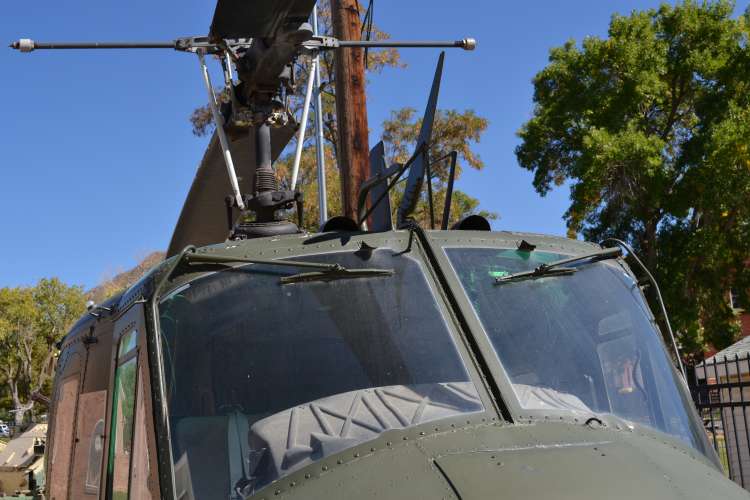
Few implements of war are as representative of the US presence in Vietnam as the Bell Huey UH-1-series helicopters. Whether serving in the role of troop transport for airborne assault, supply transports, aerial gunships, or medical evacuation, the Huey was seemingly everywhere. The versatile aircraft, officially the “Iroquois,” was affectionately known to all as the “Huey,” a name derived from its early model designation of HU-1A. The Huey, later re-designated UH-1, was a mainstay during America’s presence in Vietnam, and 11 Huey crewmen earned the Medal of Honor.

Retreat and Resource Gaps

By 1972, Navy and Marine Hueys had mostly exited the conflict. But the SVAF grappled with challenges, notably a lack of pilots and maintenance crews. Despite owning five hundred Hueys by 1972, only ninety-one were operational by 1973’s end. The Huey, although essential, was underutilized due to Saigon’s limited resources and technical constraints.
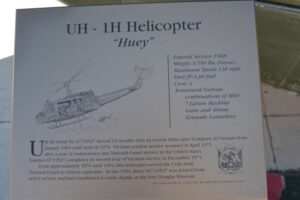
UH-1H Huey Helicopter Plaque

Diminishing US Support

Post the 1973 armistice, as American combat operations ceased in Cambodia, optimism surrounded South Vietnam’s chances of autonomy. However, waning US public and political support for the war meant diminished aid for Saigon. Crucial support, including up to date Hueys and other weaponry, was not forthcoming.

Saigon’s Fall

1975 heralded North Vietnam’s decisive offensive. Lacking US backing, Saigon was overwhelmed. April saw Operation Frequent Wind, where Hueys played a pivotal evacuation role, sometimes discarded at sea to allow others to land on packed US Navy ships.

Losses and Legacy

The US’s toll during the war included thousands of Huey helicopters. As Saigon’s evacuation unfolded, over one hundred planes, including Hueys, were transported to Guam, deciding their next steps. The war showed the helicopter’s transformative impact on modern warfare, a fact acknowledged even by the victorious North Vietnamese. They adopted captured Hueys, using them in their nation’s unification endeavors. Despite their earlier adversarial role, the Huey became a symbol of rebuilding and unity.

Similar Posts

  • CH-46 Sea Knight Helicopter – Workhorse of the Navy

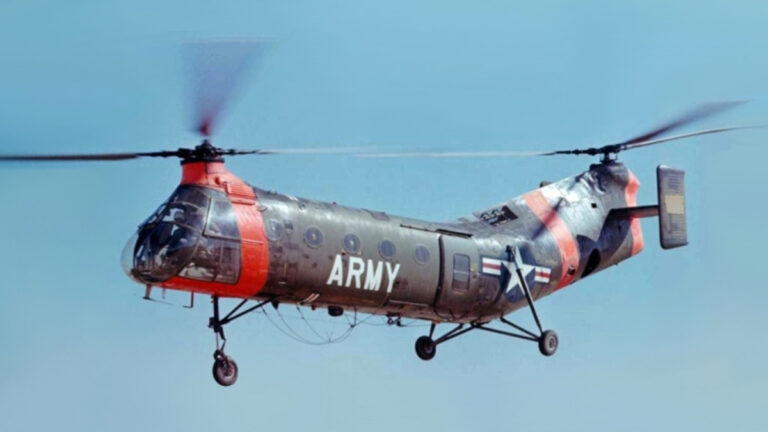
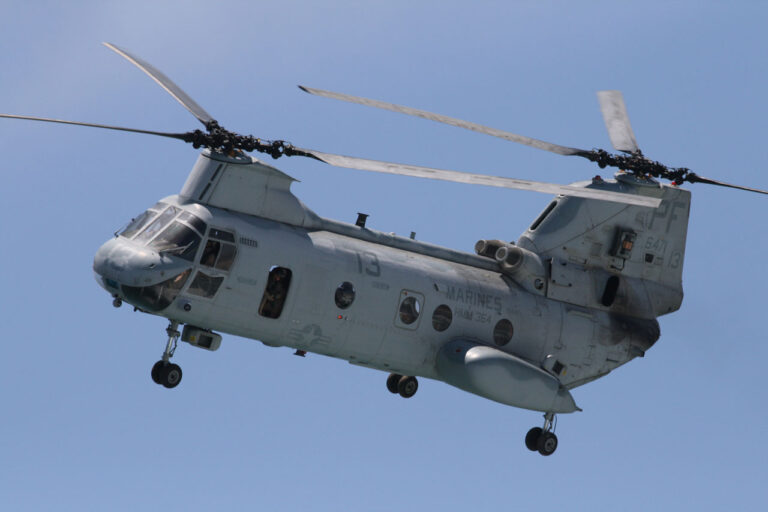
    The CH-46 Sea Knight Helicopter has been the workhorse of the Navy and Marine Corps medium-lift squadrons since it entered service in June 1964.  It was developed as the Vertol Model 107, which was also being designed for the civilian market, and was first flown on April 22, 1958.  An initial trial batch was ordered by the Army but this was redued when Vertol published drawings of the enlarged Model 114 which became the Chinook.  By 1960 Vertol had been absorbed into Boeing.

  • Kamov Ka-52 Helicopter: The Alligator’s Legacy and Modern Evolution

    The Kamov Ka-52 helicopter, commonly dubbed the ‘Alligator’, is a true marvel of aviation engineering. Renowned for its unique co-axial rotor design, this aircraft stands out not just for its distinctive silhouette but also for its impressive operational capabilities. Our comprehensive article delves into the Alligator’s journey from its conceptual design to its formidable presence on the modern battlefield. We explore its technological advancements, ensuring it remains at the forefront of aerial combat. The Kamov Ka-52’s operational history is a testament to its resilience, with a history that highlights both its might and adaptability. Additionally, with continuous modernization efforts, this helicopter is poised to meet the demands of future warfare. A significant focus is also laid on its global reach, highlighting its current operators and potential export avenues. The article concludes with a reflective look at the Alligator’s enduring legacy and its promising future in the realm of military aviation. Join us in this deep dive into the world of the Kamov Ka-52 and discover why it is a beacon of innovation and excellence.

  • More CH-47 Chinook Helicopter History

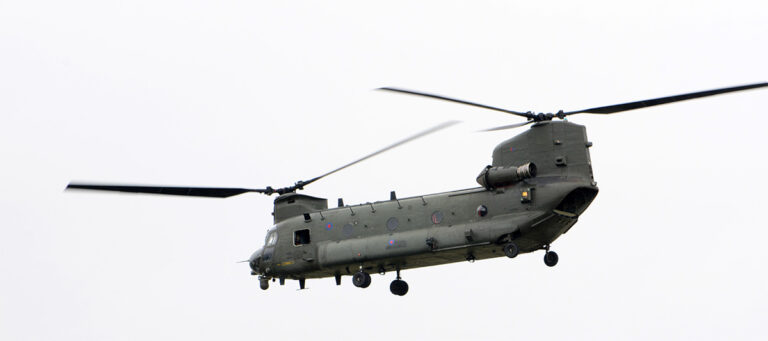
    The Boeing CH-47 Chinook Helicopter has a storied history. Initially developed as an expansion of the Vertol Model 107, it was favored by the Army. Why? Because of its substantial carrying capacity. Its prototype took to the skies on September 21, 1961, and the Army welcomed the CH-47A Chinook in 1972.

    These large twin rotors, combined with a roomy fuselage and cutting-edge turboshaft engines, provided a level of airlift ability previously unseen. Furthermore, the design of the Chinook’s fuselage is primarily free from obstructions, housing the engine and gearbox in pylons and fuel in side pods.

  • |

    Bell Huey Helicopters in Combat

    The Bell UH-1 Helicopter played an unprecedented role in the Vietnam War, earning the reputation of the most crucial military aircraft. Serving various purposes, including troop transport, armed attacks, and medical evacuations, the Huey accomplished over 36 million sorties during the war. It revolutionized the battlefield in three distinctive roles – as “slicks,” “gunships,” or “dustoffs.”

  • Korean War and the Medevac Helicopter

    The development of helicopters during and after the Second World War proved the value and utility of rotary wing aircraft in combat situations. So much so that the Army, Navy and Air Force all set up their own helicopter development units.

    This enabled a shift in how critical care was delivered in combat. During previous conflicts, medical stations had to be as close to the front line as possible to shorten the path to care. This led to obvious risks and compromises in both treatment and conditions.  The advent of medevac helicopter meant that field hospitals could be set up in central locations and have patients delivered to them. That meant better care, better conditions and the ability to recover after operations before being evacuated. That alone saved hundreds of lives.

  • CH-47 Chinook Helicopter – Making a Great Helicopter Better

    The CH-47 Chinook Helicopter was an enlarged development of the Vertol Model 107, designated Model 114, which the Army preferred because of its greater capacity.  The prototype was first flown on September 21, 1961, and deliveries to the Army began in 1972 as the CH-47A Chinook.  With large twin rotors powered by relatively new turboshaft engines, plus a cavernous fuselage, the CH-47 offered helicopter airlift capability not previously available.