Sikorsky S-60 Helicopter – The Army’s Ultimate Tactical Transport System
The Birth of the Sikorsky Model S-60
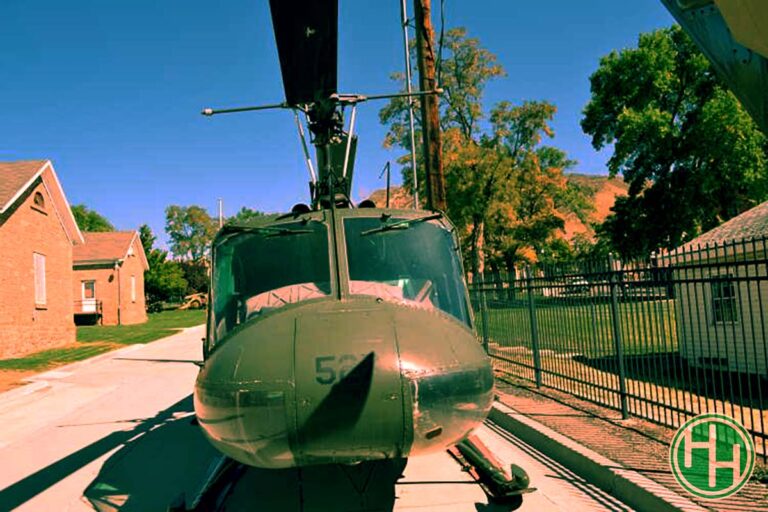
Emerging as a response to the Army’s demand for a Utility Tactical Transport Aircraft System (UTTAS), Sikorsky submitted Model S-60. The mission was to replace the well-served UH-1 Iroquois with a superior helicopter. The first prototype took to the skies on October 17, 1974, marking the start of a new chapter in Sikorsky’s history. The Army initially ordered 2,260 units but due to financial limitations, the Army only took delivery of 1400. June 1979 saw the first of the UH-60 Black Hawk helicopters joining the Army’s fleet.
The Advancement of the Black Hawk Series
Significantly larger than its predecessor, the Black Hawk’s first models could accommodate 20 soldiers, an upgrade from the UH-1’s 11. Furthermore, it had a substantial underslung load capacity of 8,000 lbs. The UH-60 was easily air portable, capable of fitting one into a C-130 Hercules, two into a C-141 StarLifter, and six into a C-5 Galaxy. The UH-60L Black Hawk replaced by the UH-60A, boasting stronger engines and a reinforced underslung hook. Medical evacuation models of both versions could house six stretchers.
Specialized Variants and Development
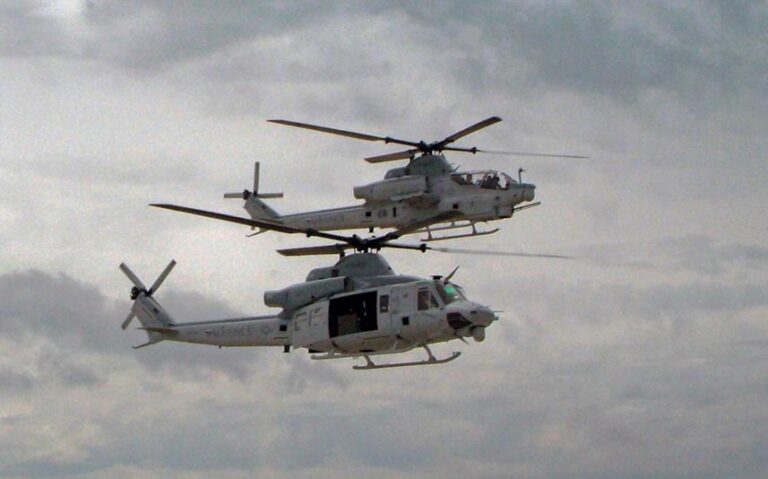
The Black Hawk series went through multiple modifications, transforming it into a versatile tool on the battlefield. Specialists upgraded approximately 40 UH-60Ls to EH-60A, tailoring them specifically for battlefield electronic warfare (EW). Additionally, they upgraded around 30 helicopters to the MH-60A helicopter, equipping them with specialist equipment for special operations. A prototype UH-60M, first flown in September 2003, was the successor of the UH-60L.
DMZ DUSTOFF VIETNAM: True Stories of Unarmed Medevac Missions As Told By The Men Who Flew Them

Grabbing the hand-held radio and transmitting on Guard, Halvorson alerted the tower to their situation. “This is Dustoff 7-oh-7 on guard, north of Quant Tri about 20 miles out. We have multiple wounded on board, no idea of their condition, no hydralics, and no instruments. We need a straight in. Clear everything, I need to be first in line”. It was about this this time that Gary noticed one of the few instruments still working was the engine temperature gauge, “And it was running pretty hot.”
Navy Adaptations and Modern Evolutions
For the Navy’s LAMPS MK.III (Light Airborne Multi-purpose System) competition in 1977, Sikorsky put forth the S-60B, which emerged victorious. Known as the SH-60B Seahawk, this model featured an automatic tail and rotor folding mechanism for optimized space management on board ships. The Seahawk underwent extensive internal modifications to fulfill Anti-Submarine Warfare (ASW) and Anti-ship Missile Defense (ASMD) operations. Armed with torpedoes and the AGM-119 Penguin anti-ship missile, the Seahawk became a formidable naval presence. The SH-60B also paved the way for successors like the SH-60F Ocean Hawk and MH-60R, further expanding the Black Hawk family’s operational reach.
Frequently Asked Questions:
What was the main objective behind the development of the Sikorsky Model S-60?
Sikorsky developed the Model S-60 to fulfill the Army’s Utility Tactical Transport Aircraft System (UTTAS) requirement, with the aim to replace the UH-1 Iroquois helicopter.
How does the carrying capacity of the UH-60 Black Hawk compare to the UH-1 Iroquois?
The UH-60 Black Hawk has a greater carrying capacity than the UH-1 Iroquois. The initial models of Black Hawk could carry 20 troops compared to the UH-1’s 11, along with a substantial underslung load.
What improvements were incorporated into the UH-60L Black Hawk?
Superseding the UH-60A Black Hawk, the UH-60L Black Hawk comes with more powerful engines and a reinforced underslung hook.
How was the UH-60L Black Hawk adapted for battlefield electronic warfare?
Sikorsky modified approximately 40 UH-60L Black Hawks into the EH-60A variant, specifically tailoring them for battlefield electronic warfare (EW).
What are the unique features of the Navy-adapted version of the Sikorsky Model S-60?
Sikorsky adapted the Model S-60 for the Navy, resulting in the SH-60B Seahawk. This version featured an automatic tail and rotor folding mechanism for optimal space management on board ships and underwent internal modifications for Anti-Submarine Warfare (ASW) and Anti-ship Missile Defense (ASMD) operations. The Seahawk could also be armed with torpedoes and anti-ship missiles.